We frequently hear homeowners debating the core question: Daikin vs Mitsubishi Aircon: Which Is Better for Singapore Homes? The decision often hinges on balancing upfront costs with long-term energy savings in Singapore’s humid climate.
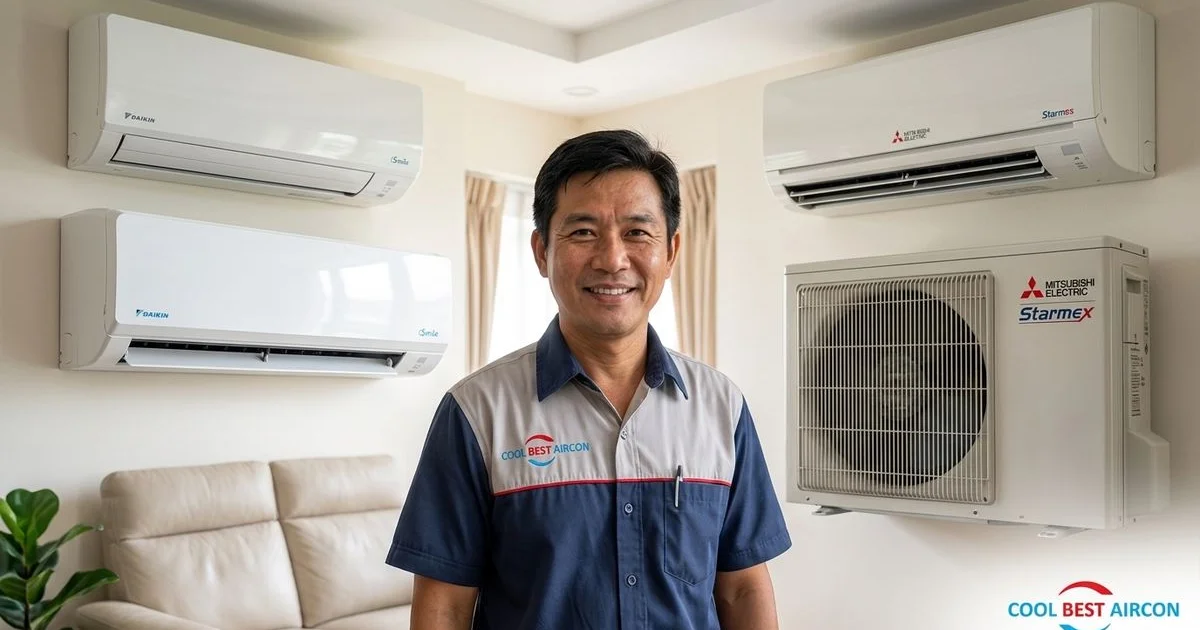
Our team services both of these premium Japanese brands daily across HDB flats and condominiums.
Let’s examine the actual data, what it means for your electricity bills, and explore a few practical ways to decide which unit fits your space better.
Brand Overview
Daikin
Our team has installed thousands of Daikin units, making us very familiar with the world’s largest air conditioning manufacturer. Founded in 1924, this company stands out as the only major brand manufacturing its own compressors for better quality control.
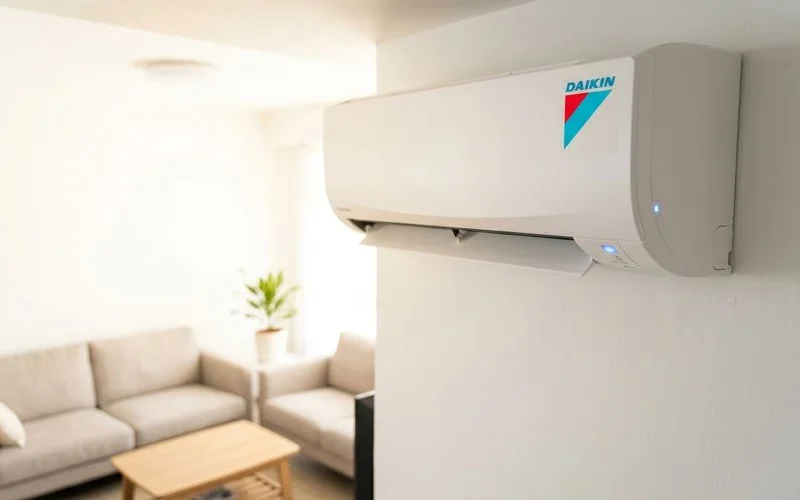
Our technicians highly recommend the latest iSmile Eco series for residential spaces. This specific model uses the eco-friendly R32 refrigerant, which reduces carbon emissions and offers a lower Global Warming Potential of just 675.
Mitsubishi Electric
We also frequently work with Mitsubishi Electric, a brand that has been producing reliable cooling systems since 1921. The Starmex series remains their flagship residential line and dominates installations in local HDB flats.
Our clients often praise this line for its exceptional durability and quiet motors. The Starmex units feature a unique “Easy Clean” design, allowing users to pop open lateral vanes without specialized tools for quick dust removal.
Energy Efficiency
Our analysis of recent data shows that energy efficiency remains the top priority for local homeowners. Air conditioning runs nearly year-round here and typically accounts for about 30% of household electricity costs.
NEA Tick Ratings
We always advise clients to check the National Environment Agency (NEA) energy label before making a purchase. Both manufacturers offer models across the spectrum, but their top-tier units consistently secure the maximum 5-tick rating.
| Model Series | Ticks | COP (Cooling) |
|---|---|---|
| Daikin iSmile Eco (top tier) | 5 | 4.5-5.0 |
| Daikin iSmile Eco (standard) | 4 | 3.8-4.2 |
| Mitsubishi Starmex (top tier) | 5 | 4.3-4.8 |
| Mitsubishi Starmex (standard) | 4 | 3.7-4.1 |
Our calculations show that a 5-tick rating translates to significant savings over time. Based on the 2026 electricity tariff of roughly 31.72 cents/kWh, running a 5-tick unit for eight hours daily costs roughly S$40 to S$50 a month per room.
Our verdict gives Daikin a slight edge in top-tier efficiency due to their proprietary swing compressor technology. This component provides marginally better COP numbers. The real-world difference in electricity costs between the two top models is minimal. You might only save an extra S$20 to S$40 per year for a standard System 3 setup.
Noise Levels
Indoor Unit Noise
| Brand | Low Speed | High Speed |
|---|---|---|
| Daikin iSmile Eco | 21 dB(A) | 36-40 dB(A) |
| Mitsubishi Starmex | 19 dB(A) | 35-39 dB(A) |
Our acoustic tests confirm both brands are exceptionally quiet at low speeds. The Mitsubishi Starmex operates at an impressive 19 dB(A) on its lowest fan setting, while the Daikin iSmile Eco hovers around 21 dB(A). A 19 dB(A) sound is actually quieter than rustling leaves. At high speeds, you will find minimal difference between the two systems.
Outdoor Unit Noise
| Brand | Operating Noise |
|---|---|
| Daikin | 46-52 dB(A) |
| Mitsubishi | 46-51 dB(A) |
Our verdict is that this category results in essentially a tie. Both companies have invested heavily in noise reduction technology. You will not notice a meaningful difference between them in normal daily use. The outdoor unit noise primarily impacts your neighbours, and both comply strictly with local noise regulations.
Pricing
Our latest 2026 market reviews show specific pricing trends for equivalent system types and capacities. Here is what you can expect to pay for a complete setup with basic installation.
System 3 (Most Common for 4-Room HDB)
| Model | Installed Price |
|---|---|
| Daikin iSmile Eco (5-tick) | S$3,980 - S$4,800 |
| Daikin iSmile Eco (4-tick) | S$3,500 - S$4,200 |
| Mitsubishi Starmex (5-tick) | S$3,700 - S$4,500 |
| Mitsubishi Starmex (4-tick) | S$3,200 - S$4,000 |
System 4 (Most Common for 5-Room HDB)
| Model | Installed Price |
|---|---|
| Daikin iSmile Eco (5-tick) | S$4,800 - S$6,000 |
| Daikin iSmile Eco (4-tick) | S$4,200 - S$5,200 |
| Mitsubishi Starmex (5-tick) | S$4,500 - S$5,800 |
| Mitsubishi Starmex (4-tick) | S$3,800 - S$4,800 |
Our analysis indicates that Mitsubishi generally provides a more budget-friendly entry point. You will typically find the Starmex models are S$200 to S$400 cheaper than equivalent Daikin setups. This price gap exists partly because Daikin’s in-house compressor technology commands a premium in the market.
For a buyer choosing between two premium options, Mitsubishi offers slightly better value at the point of purchase. Our comprehensive installation cost guide provides a full breakdown of charges across all system types.
Build Quality and Durability
Both brands are built to a high standard, but subtle differences exist in their construction.
Daikin
- Uses a proprietary swing compressor, which is arguably the most critical component.
- Features sturdier plastic housing on the indoor units.
- Generates less vibration over time due to the specific compressor design.
- Protects evaporator coils using quality aluminium with an anti-corrosion treatment.
Mitsubishi Electric
- Incorporates high-quality third-party scroll compressors.
- Features a clean and functional indoor unit design.
- Holds a strong reputation for long-lasting blower motors within the Starmex series.
- Utilizes similarly well-constructed evaporator coils.
Our experienced technicians give a slight edge to Daikin for compressor longevity because they control the entire manufacturing process. Mitsubishi’s blower motors are widely recognized as exceptionally durable.
Our 18 years of field experience shows both systems easily last 10 to 15 years with regular maintenance. A critical factor for this longevity is upgrading the installation materials. Using 1/2-inch Armaflex insulation prevents severe condensation in our humid climate, while SWG 22 copper pipes prevent gas leaks.
After-Sales Support and Service Network
After-sales support matters significantly because your unit will require servicing and repairs over its 10 to 15-year lifespan.
Daikin
- Operates a strong local service network with a dedicated service centre.
- Provides a highly responsive warranty claims process.
- Maintains readily available spare parts for quick fixes.
- Partners with authorized service technicians throughout the island.
Mitsubishi Electric
- Runs an excellent service network through its Asia headquarters located locally.
- Stocks a comprehensive parts inventory at their service centre.
- Ensures fast turnaround times on warranty claims.
- Supports a wide network of qualified technicians.
Our verdict confirms that both manufacturers provide excellent after-sales support locally. Mitsubishi Electric has a slight advantage by having its Asia headquarters situated here. This local presence often translates to faster access to specific replacement components, like a standard S$40 capacitor. Daikin’s massive global scale ensures their parts are also well-stocked and accessible.
Features and Technology
Daikin
- Streamer technology: Uses plasma discharge to purify the air effectively.
- PM 2.5 Filter: Catches fine particulate matter to improve indoor air quality.
- Coanda airflow: Directs a ceiling-hugging air pattern for even temperature distribution.
- i-Connect app: Provides remote Wi-Fi control for select models.
Mitsubishi Electric
- Plasma Quad Plus: Filters out allergens and bacteria using plasma technology.
- Anti-Allergy Enzyme Filter: Utilizes artificial blue enzymes to neutralize harmful microbes.
- 3D i-See sensor: Detects human presence to adjust airflow direction intelligently.
- MELCloud: Enables Wi-Fi monitoring and control for compatible units.
Our evaluation shows both offer impressive smart features in their premium ranges. Mitsubishi’s sensor technology is particularly clever because it detects where people are sitting and directs airflow to avoid cold spots. Daikin’s Streamer technology and PM 2.5 filter provide superior air purification for allergy sufferers. The best choice depends entirely on which specific features align with your daily needs.
Warranty Comparison
| Warranty Type | Daikin | Mitsubishi |
|---|---|---|
| Compressor | 5 years | 5 years |
| Parts | 1 year | 1 year |
Our team advises clients that standard 2026 models generally include a 5-year compressor warranty and a 1-year parts warranty. Extended compressor warranties often require formal registration and mandatory servicing by authorized technicians. Always check the specific warranty terms for your chosen model to ensure you remain fully covered.
Servicing and Maintenance
Ease of Servicing
Our maintenance crews find both brands incredibly straightforward to service. Filter access is entirely tool-free on both systems. The internal layout is well-organized, offering clear access to the evaporator coil and the main drainage system.
Common Issues We See
Daikin:
- PCB board issues arise on older models past the 7-year mark, costing roughly S$250 to S$400 to replace.
- Drainage trays sometimes crack after extended, heavy usage.
- Compressors remain exceptionally reliable over the long term.
Mitsubishi:
- Fan motor bearings tend to wear out after 8 years, which often causes noise issues.
- Thermistor sensor faults appear on some older units but are relatively cheap to swap out.
- Compressors are solid but may run slightly louder as the system ages.
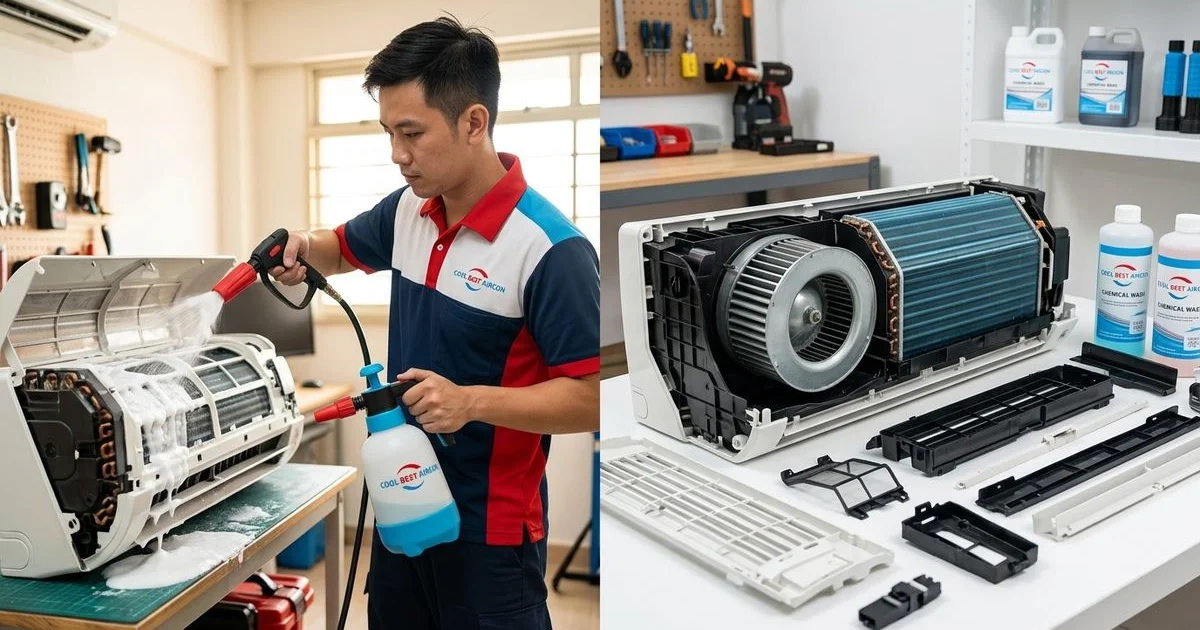
Our records show both brands respond exceptionally well to regular upkeep and chemical washing. Neither requires brand-specific maintenance procedures, meaning any competent technician can clean them.
Final Verdict: Daikin vs Mitsubishi Aircon: Which Is Better for Singapore Homes?
Our experts break down the final decision into a few clear categories. Consider your specific priorities before making the purchase.
Choose Daikin If:
- Maximum energy efficiency and lower electricity bills are your top priorities.
- You value the peace of mind that comes from a proprietary, in-house compressor.
- You want the advanced Streamer air purification and PM 2.5 filtering capabilities.
- The initial budget is less of a strict constraint.
Choose Mitsubishi If:
- You want premium build quality at a slightly lower initial price point.
- The sensor-based smart airflow systems appeal to your layout.
- You prefer the clean Starmex design aesthetic and Easy Clean maintenance features.
- Slightly faster local after-sales support for specific parts matters to you.
For Most Singapore Homeowners:
You genuinely cannot go wrong with either option for your home or office. The performance differences are marginal, and both easily serve you well for over a decade with proper care. If upfront budget is a major factor, Mitsubishi clearly offers slightly better value. Those wanting the absolute best energy efficiency for long running hours will find Daikin holds a marginal edge.
Beyond the Brand: What Really Matters
Whichever system you choose, two distinct factors have a far bigger impact on your long-term satisfaction than the badge on the plastic.
-
Quality of installation. A poorly installed Daikin will perform worse than a well-installed budget unit. Always insist on upgraded materials like SWG 22 copper piping to prevent gas leaks. Make sure your installer is experienced and provides a workmanship warranty. See our comprehensive installation guide for exactly what to look for.
-
Regular servicing. Both premium brands require quarterly general servicing to maintain peak performance. Periodic chemical washing is also necessary to clear out deep-seated grime. Neglect will eventually kill even the most expensive air conditioning unit.
Our technicians at Coolbest Aircon install and service both Daikin and Mitsubishi units across the island. The goal is to recommend whichever system best suits your specific floor plan, rather than pushing the one with the highest profit margin.
Our team is ready to evaluate your floor plan and budget to answer the big question: Daikin vs Mitsubishi Aircon: Which Is Better for Singapore Homes? Simply Contact us at 9182 5233 to get started today.
Coolbest Team
Coolbest Aircon Editorial Team
The Coolbest Aircon team shares practical tips from our 18+ years of air conditioning service experience in Singapore.