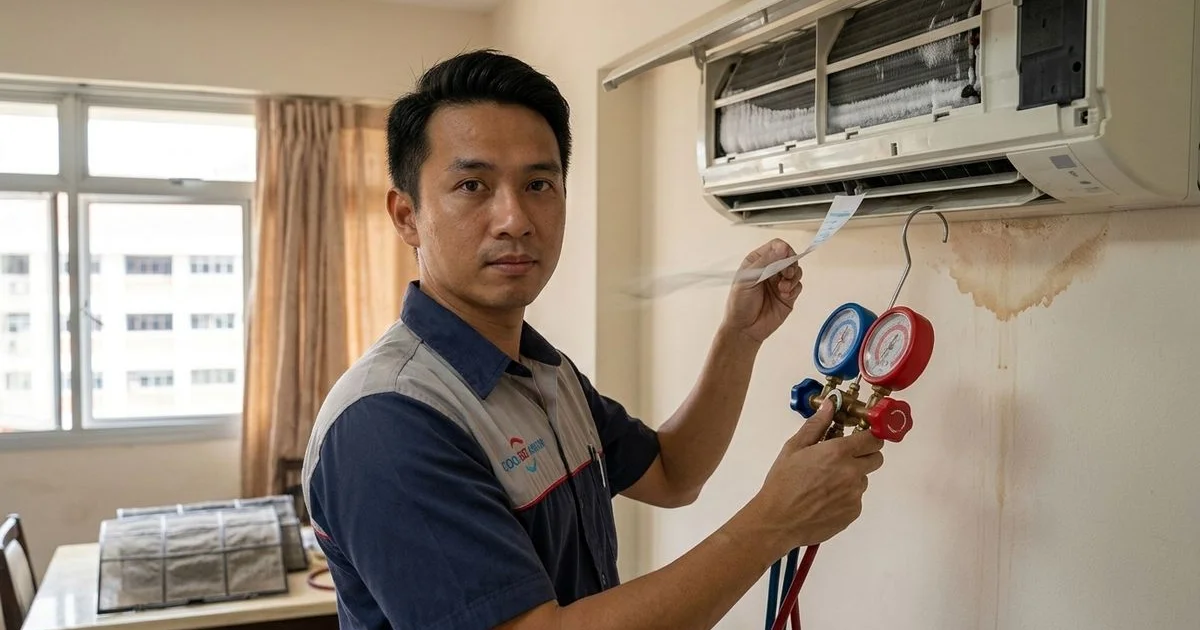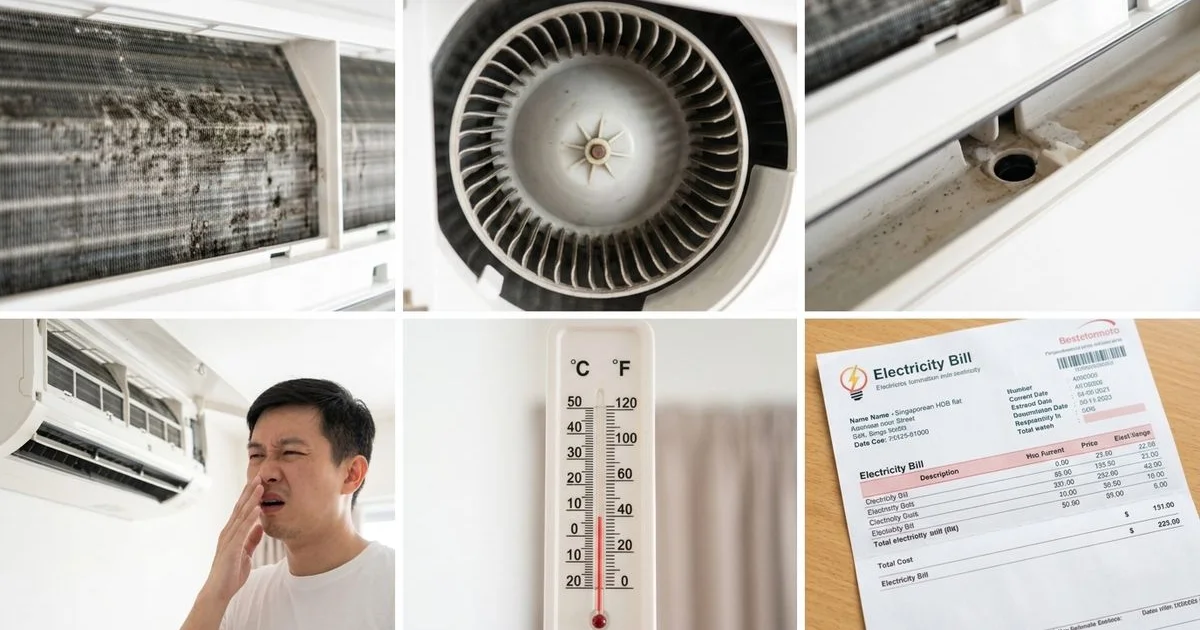
We know the feeling of opening that monthly SP Group electricity bill and wincing at the total. Air conditioning routinely accounts for roughly 30% of a typical household’s energy consumption. Waiting for a breakdown is a guaranteed way to face expensive repair bills.
Our team at Coolbest Aircon Servicing frequently speaks with homeowners desperate to cut these costs. The secret to managing this expense relies heavily on understanding How Often Should You Service Your Aircon in Singapore? Regular maintenance is the only proven method to keep systems running smoothly year after year.
We want to look at the data, see what it actually tells us, and explore a few practical ways to protect your cooling investment. Let us outline the exact schedule that works best for different types of homes.
How Often Should You Service Your Aircon in Singapore? The General Rule
For most households, scheduling a professional session once every three months is the sweet spot. Major manufacturers like Daikin and Mitsubishi Electric strongly recommend this timeline for units used daily.
Our technicians see the best long-term results with this quarterly approach. Singapore’s tropical climate forces compressors to work exceptionally hard. We agree with this standard because most families switch their units on for 8 to 16 hours per day.
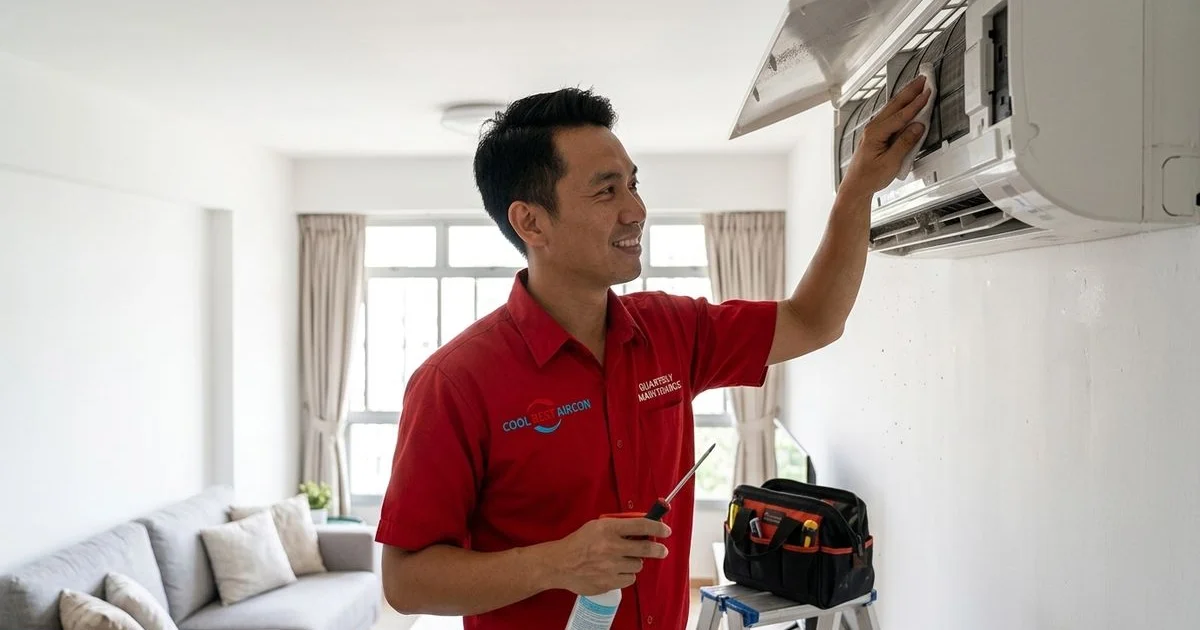
This level of use leads to rapid dust accumulation on filters and evaporator coils. During a standard general servicing session, your technician handles several vital tasks:
- Clean or wash the air filters to restore airflow
- Check and clean the evaporator coils
- Inspect the drainage pipe to clear early blockages
- Verify the R32 or R410A refrigerant level
- Test the thermostat and general electrical performance
- Clean the front panel and external casing
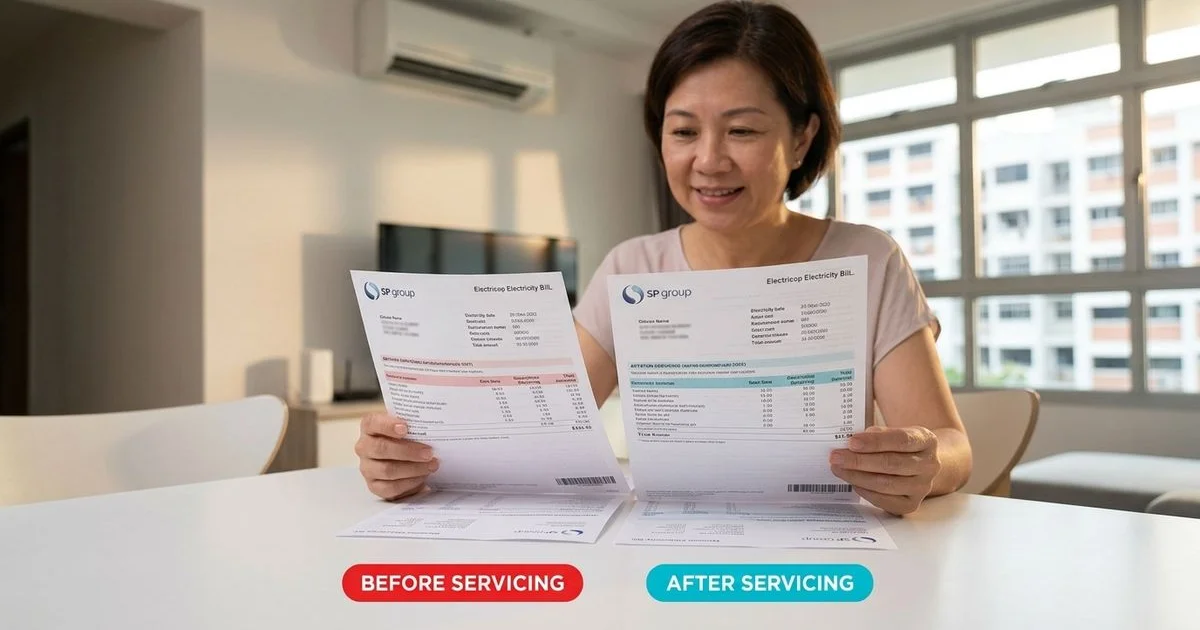
Our customers consistently report lower monthly electricity bills when sticking to this schedule. This routine maintenance stops small problems from escalating into major system failures. Consistent care keeps your hardware operating at peak efficiency.
Why Singapore’s Climate Demands More Frequent Servicing
People often ask why three months is the benchmark here when manufacturers in temperate countries suggest annual visits. Ignoring them leads to premature equipment failure. We explain that three specific environmental factors dictate the need for a tighter maintenance schedule.
These local challenges accelerate wear and tear significantly.
High Humidity Accelerates Mould Growth
Our cleaning processes target fungal growths directly to protect your indoor air quality. The constant moisture in the air provides a perfect breeding ground for mould and bacteria inside your unit.
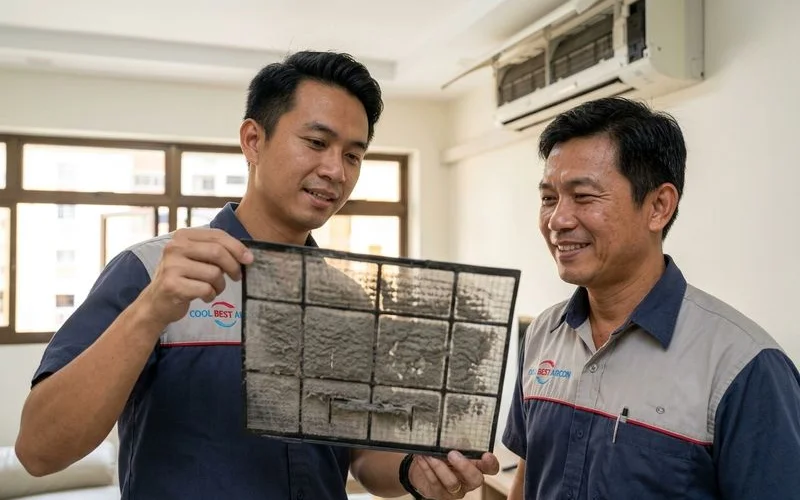
If you notice a musty or unpleasant smell coming from your vents, mould is usually the culprit. We frequently find thick blockages in systems left uncleaned for more than a quarter.
Constant Dust and Urban Pollution
Even in pristine apartments, airborne dust particles and cooking fumes gather on filters incredibly fast. A clogged filter forces the compressor to work much harder.
Our regular checkups ensure these filters remain clear and efficient. This extra strain increases energy consumption and drastically shortens the lifespan of popular models like the Daikin iSmileEco series. Common indoor pollutants that clog these components include:
- Pet dander and shedding fur
- Microscopic dust mites
- Cooking greases and airborne oils
Near-Continuous Daily Operation
We highly recommend adhering to a strict schedule to offset the heavy usage typical in local homes. Unlike countries with distinct seasons, local households rely on their cooling systems almost every single day.
The local tropical weather means units rack up thousands of running hours annually. Our dispatch records show that this continuous operation directly translates to faster dirt accumulation and mechanical stress.
Servicing Frequency by Usage Level
Customizing the schedule to your exact habits prevents unnecessary wear over time. While the quarterly rule is a great baseline, your specific situation might require a slight adjustment. We break down exactly how usage impacts your maintenance needs below.
Heavy Usage (12+ Hours Daily)
Running a unit for more than 12 hours a day demands a session every two months. This extended run time is incredibly common with the rise of remote work.
Our technicians often clear significant buildup from these heavily used systems. The extra usage means filters clog faster and drainage systems face a higher risk of jelly-like blockages. Common findings during these bi-monthly visits include:
- Thick layers of dust on the primary filters
- Algae formations in the drainage pan
- Grime accumulation on the blower wheel
Moderate Usage (6-12 Hours Daily)
We categorize most local families under this standard usage level. Running the system through the evening and night aligns perfectly with the standard schedule.
Every three months is the optimal interval to keep everything functioning flawlessly. Our standard contracts are built entirely around this highly effective timeline.
Light Usage (Under 6 Hours Daily)
Guest bedrooms or occasional study rooms do not accumulate dust quite as quickly. Stretching the interval to every four months works perfectly for these specific rooms.
We strongly warn against going beyond four months because ambient humidity still promotes mould growth inside idle machines. Regular checks ensure no stagnant water sits in the drain pan.
Commercial or Office Spaces
Commercial environments require servicing every one to two months. Providers build specialized maintenance plans to help businesses comply with workplace safety standards.
We see that workplaces need a much more aggressive approach to maintain healthy indoor air quality. A 2025 study highlighted that office temperatures below 21°C or poor air quality can reduce worker productivity significantly.
What Happens When You Skip Servicing
We understand that skipping a scheduled visit might seem like a quick way to save some cash. Neglect actually creates a chain reaction of mechanical failures that escalate rapidly in severity. The costly results of delayed maintenance show up daily in local repair logs.
Reduced Cooling Efficiency
Our technicians frequently encounter dirty evaporator coils that have lost the ability to absorb heat effectively. The system simply cannot reach the set temperature when blocked by layers of grime.
Residents often start wondering why your aircon is not cold enough despite the machine running at full blast. We use professional cleaning methods to restore that thermal transfer capability instantly.
Spiking Electricity Bills
When the machine struggles to cool the space, the compressor runs longer and consumes far more power. Recent National Environment Agency data highlights the financial impact of this inefficiency.
“Each degree below 25°C can increase your aircon’s energy use by up to 10%, drastically inflating monthly expenses.”
Our technicians notice poorly maintained units force users to lower the temperature just to feel comfortable. Clients often see their energy costs drop noticeably after a thorough cleaning.
Destructive Water Leaks
Choked drainage pipes remain one of the most frequent complaints island-wide. Specialized vacuums keep these lines crystal clear and flowing smoothly.
Our team knows that skipped maintenance allows dirt and algae to form thick blockages in the drain pan. When the condensate cannot escape, water leaks from your indoor unit directly onto your walls and expensive flooring.
Catastrophic Compressor Failure
We consider the compressor the heart of your cooling system and the most expensive part to replace. Replacing a burnt-out compressor in 2026 typically costs between SGD 600 and SGD 1,500 depending on the brand.
These vital components overheat and die when forced to push refrigerant through filthy coils. Our preventative checks ensure the compressor operates safely within normal temperature ranges.
When You Need More Than General Servicing
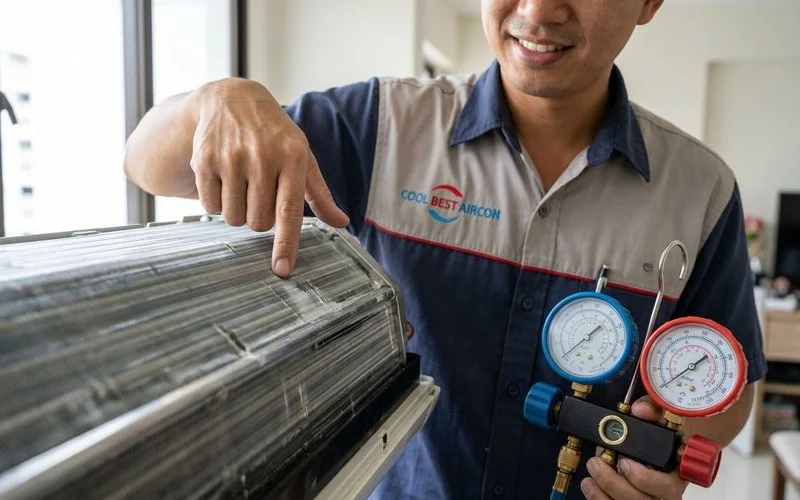
Routine wiping and filter washing will not fix a system that has been neglected for years. Specialized treatments target deep-seated grime and mechanical issues effectively.
Our advanced options are required for serious performance restoration. Here is a look at the deeper cleaning methods available.
The Deep Cleaning Chemical Wash
Persistent foul odours or visible mould indicate the need for a targeted chemical wash. Booking this deep clean once every 12 to 18 months ensures optimal hygiene.
We apply a strong alkaline solution directly to the evaporator coil and blower wheel. This process dissolves stubborn biological growth and kills bacteria on contact.
The Complete Chemical Overhaul
We perform a complete chemical overhaul on systems suffering from severe airflow restrictions. This intensive process acts like a factory reset for heavily soiled machines. The standard overhaul process includes:
- Dismantling the entire indoor unit from the wall
- Soaking the coil, blower, and drain pan in a chemical bath
- Flushing the drainage pipe with pressurized water
- Testing the system for optimal performance
Our technicians carefully reassemble and test the machine to ensure it runs like new.
Refrigerant Gas Top-Up
Clean coils will not produce cold air if the system lacks the proper amount of refrigerant. A precise gas top-up restores the correct operating pressure.
We find that low gas levels almost always point to a slow leak somewhere in the copper piping. Advanced diagnostic tools help pinpoint these leaks before adding new refrigerant.
Cost of Regular Servicing vs Repair Bills
Delaying maintenance to save money is a strategy that backfires consistently. A standard visit in 2026 costs between SGD 30 and SGD 60 per unit.
We structure our pricing to prove that prevention is significantly cheaper than emergency repairs. The annual investment for a typical four-unit HDB setup serviced quarterly ranges from SGD 500 to SGD 800.
Our team encourages you to compare that modest annual fee with current market rates for common repair jobs. The financial reality becomes very clear when looking at the numbers side by side.
| Common Aircon Issue | Typical 2026 Repair Cost in Singapore |
|---|---|
| Water leaking repair | SGD 80 to SGD 150 |
| Chemical wash | SGD 80 to SGD 120 per unit |
| Chemical overhaul | SGD 150 to SGD 250 per unit |
| Gas top-up | SGD 80 to SGD 200 per unit |
| PCB board replacement | SGD 350 to SGD 900 |
| Compressor replacement | SGD 600 to SGD 1,500 |
A single compressor failure or blown PCB board will wipe out years of supposed savings. We always focus on extending the lifespan of your equipment to maximize your investment. For a detailed breakdown of all current fees, you can review the complete pricing guide.
Tips to Maximise Time Between Servicing
Professional care is mandatory, but your daily habits also play a massive role in system health. Implementing these simple habits keeps the cold air flowing strongly.
We always share a few practical steps you can take at home to maintain efficiency:
- Wash filters bi-weekly. Most split units have plastic mesh filters that you can easily rinse under the tap.
- Join the Go 25 movement. The National Environment Agency launched the “Go 25” initiative to combat overcooling. Setting the thermostat to 25°C reduces strain on the compressor.
- Clear the outdoor condenser. Ensure the bulky outdoor unit has at least 30 centimeters of clearance on all sides.
- Utilize smart timers. Set the timer to switch off an hour before your alarm rings to save power.
- Seal the room properly. Use draft blockers under doors to keep the chilled air trapped effectively.
Better performance and quieter operation will follow naturally. Our advice is to integrate these small steps into your regular household routine.
Setting Up a Servicing Schedule
Tracking maintenance dates on a calendar is tedious and easy to forget. Quarterly packages completely automate the process for your peace of mind.
Our administrators handle all the reminders and scheduling logistics so you never miss a vital cleaning. Every session includes comprehensive checks and is backed by a comprehensive 90-day service warranty. Consistency is the key to longevity for any multi-split system.
We utilize a transparent pricing model that ensures you never encounter hidden fees or surprise charges.
The Bottom Line
The answer to How Often Should You Service Your Aircon in Singapore? is a definitive three months for standard use. Routine care extends the life of your hardware well beyond the typical eight-year mark.
We strongly advise against exceeding a four-month gap under any circumstances due to the aggressive local climate. Adjusting the frequency slightly for heavy or light usage ensures your equipment receives the exact care it needs. Contact us today or call us at 9182 5233 to secure your next appointment.
Our team is ready to help protect your cooling investment today.
Mr Chong
Founder & Lead Technician
Mr Chong founded Coolbest Aircon in 2005 with over 18 years of hands-on aircon servicing experience in Singapore.