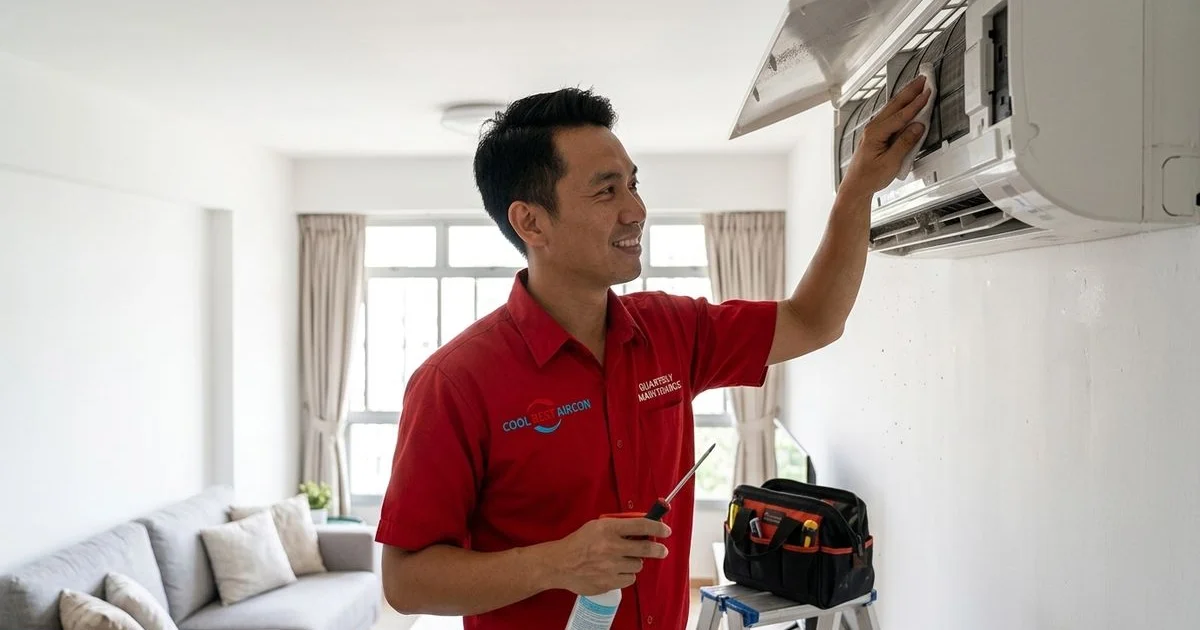
It is incredibly frustrating when your air conditioner starts acting up right in the middle of a sweltering Singapore afternoon. Our team at Coolbest Aircon Servicing, founded to deliver reliable, high-quality cooling solutions to communities across Singapore at affordable rates, sees this scenario daily. You might think regular general servicing is enough to keep things running smoothly. Routine maintenance handles the everyday dust and basic drainage checks.
Eventually, routine cleaning is no longer enough to stop deeper performance drops. Dirt, mould, and bacteria build up in places that general servicing cannot reach. This is the exact moment when a chemical wash becomes necessary.
The process uses specialised cleaning solutions to dissolve stubborn grime and kill mould deep within your unit’s components. It is a step up from general servicing but less intensive than a full chemical overhaul. Knowing when your system needs this specific treatment saves you from unnecessary spending and sudden breakdowns. Let us examine the specific warning signs to watch for and how to respond.
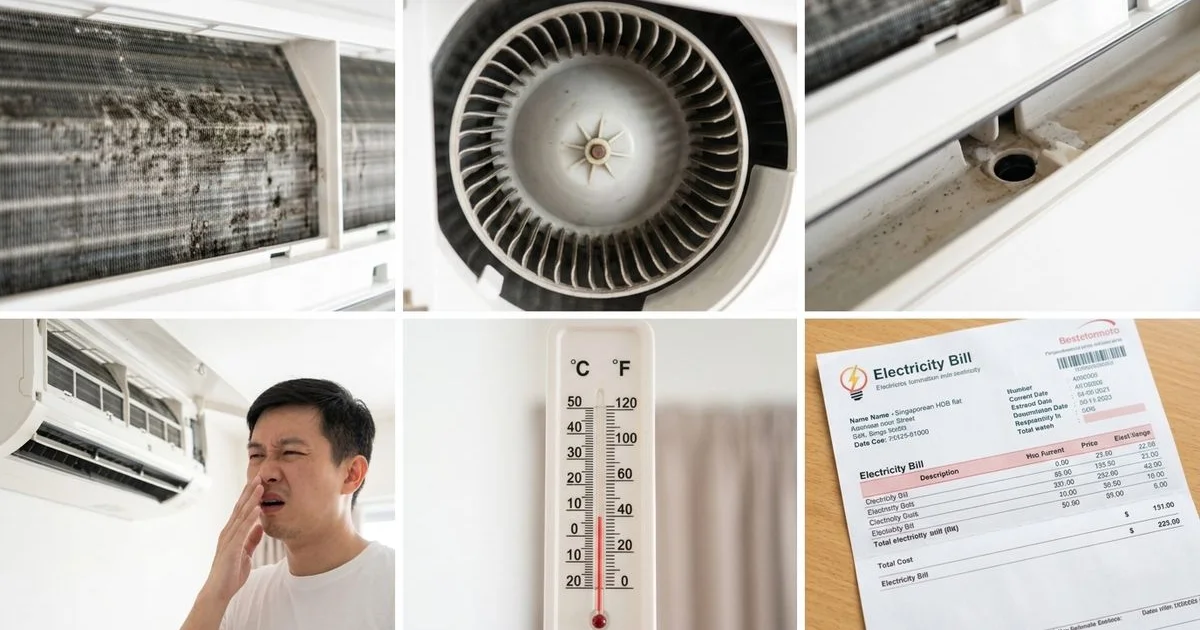
Indicator 1: Your Aircon Is Not Cooling as Well as It Used To
You have been running your unit at the same temperature setting, but the room does not feel as cold as before. Or, it takes much longer to cool down. You have already cleaned the filters, but the cooling still feels weak.
Why This Happens
Over months of operation, a layer of grime accumulates on the evaporator coil. This layer acts as insulation, preventing the coil from efficiently absorbing heat from the room air. General servicing involves wiping the visible surface of the coil. Deeper deposits between the aluminium fins simply cannot be removed without chemical intervention.
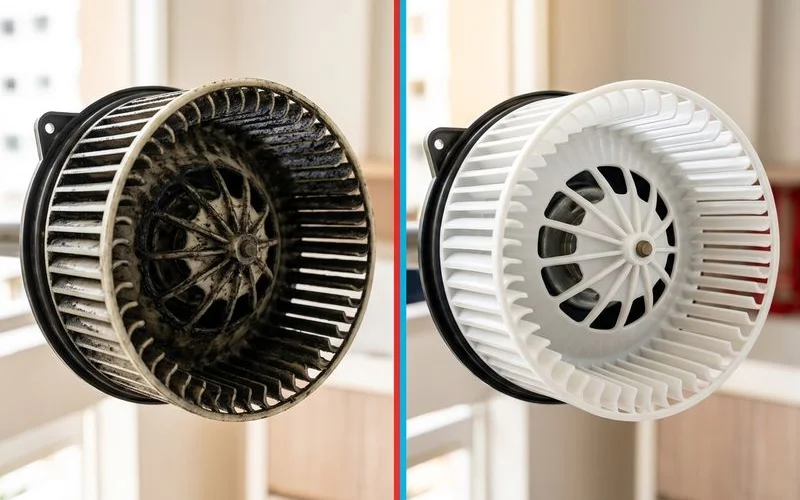
Research from energy experts in 2025 shows that just a 0.042-inch layer of dirt on the evaporator coil can reduce your unit’s cooling efficiency by 21%. The blower wheel also collects grime over time. As dirt builds up on the fan blades, the wheel becomes unbalanced and moves significantly less air.
Why a Chemical Wash Helps
The chemical solution penetrates between the evaporator fins and dissolves the grime that water and wiping cannot remove. After a thorough rinse, the coil surface is fully exposed to the passing air again.
Most customers notice a significant improvement in cooling within minutes of the wash being completed.
If poor cooling persists even after a chemical wash, the issue may be low refrigerant gas or a deeper problem requiring a chemical overhaul.
Indicator 2: Musty or Unpleasant Smell from the Vents
A smelly aircon is one of the clearest signs that mould and bacteria have taken hold inside the unit. If you notice a musty, sour, or stale odour, the source is almost certainly biological growth on the internal components.
Why This Happens
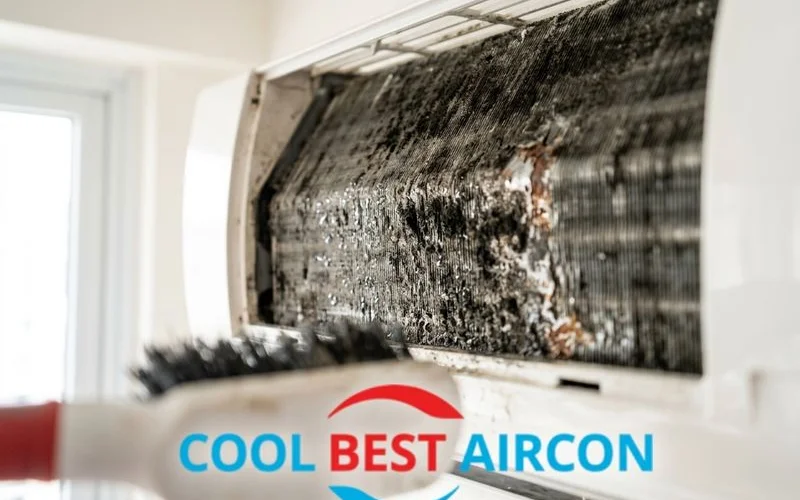
Singapore’s humidity levels regularly exceed 80%, turning the inside of your unit into a dark, moist environment. These are ideal conditions for fungal species like Aspergillus and Cladosporium to thrive. These organisms colonise the evaporator coil, blower wheel, and drainage tray.
Every time the system runs, air passes over these contaminated surfaces and carries mould spores directly into your room. General servicing may temporarily reduce the smell by removing surface-level mould. The root colonies embedded in the grime layer remain and quickly regrow.
Why a Chemical Wash Helps
The chemical solution used in a wash is formulated to kill mould and bacteria on contact. By dissolving the grime layer where these organisms live, the wash eliminates both the source of the smell and the environment that allows regrowth.
Combined with the antimicrobial properties of the cleaning solution, a chemical wash effectively resets the unit’s hygiene.
Indicator 3: Increased Allergies or Respiratory Issues
If household members experience worsened symptoms when the air conditioning is running, the unit’s air quality may be heavily compromised. This is especially true for children, the elderly, or anyone with asthma.
Why This Happens
A dirty unit does not just blow less cold air. It actively blows contaminated air into your living space. Mould spores, bacteria, dust mite waste, and fine particulate matter trapped in the grime get dispersed into the room.
These irritants commonly trigger several health responses:
- Sneezing and runny nose
- Itchy or watery eyes
- Coughing and wheezing
- Worsened asthma symptoms
- Skin irritation or rashes
The connection between dirty units and respiratory health is well documented. In Singapore’s enclosed HDB and condo environments, indoor air quality is largely determined by how clean your cooling system is.
Why a Chemical Wash Helps
By removing the accumulated biological contaminants, a chemical wash significantly improves the quality of the air your unit circulates. After a wash, the air passing through the clean coil and blower is free of mould spores and bacterial particles.
Indicator 4: Water Dripping or Leaking from the Unit
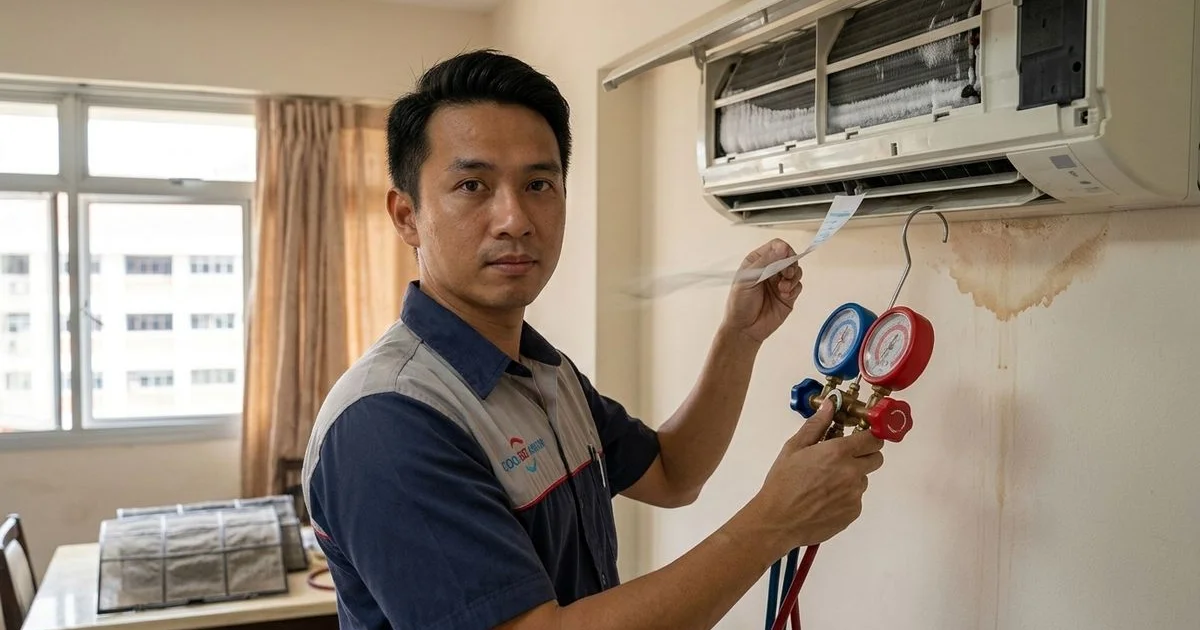
If water is leaking from your indoor unit, it usually means the condensate drainage system is completely blocked. While general servicing includes a basic drainage flush, sometimes the blockage is too severe for routine clearing.
Why This Happens
Mould, algae, and sludge build up inside the drainage tray and pipe over time. In Singapore’s humid climate, a specific bacterial biofilm called Zoogloea thrives in the constantly wet drainage system. Often referred to as “AC slime,” this jelly-like substance hardens and creates a stubborn plug.
When the blockage becomes significant, water backs up in the tray and overflows from the unit. In some cases, the drainage tray itself has accumulated so much grime that water pools instead of flowing towards the outlet.
Why a Chemical Wash Helps
The chemical solution breaks down the sticky Zoogloea biofilm in the drainage tray and helps clear the pipe. The tray is thoroughly cleaned, and the outlet is verified as flowing freely.
This addresses the root cause of many water leaking issues, rather than just treating the immediate blockage.
For recurring drainage problems that persist even after a chemical wash, a chemical overhaul allows the technician to fully disassemble and clean the drainage system.
Indicator 5: Your Electricity Bill Has Increased Without Explanation
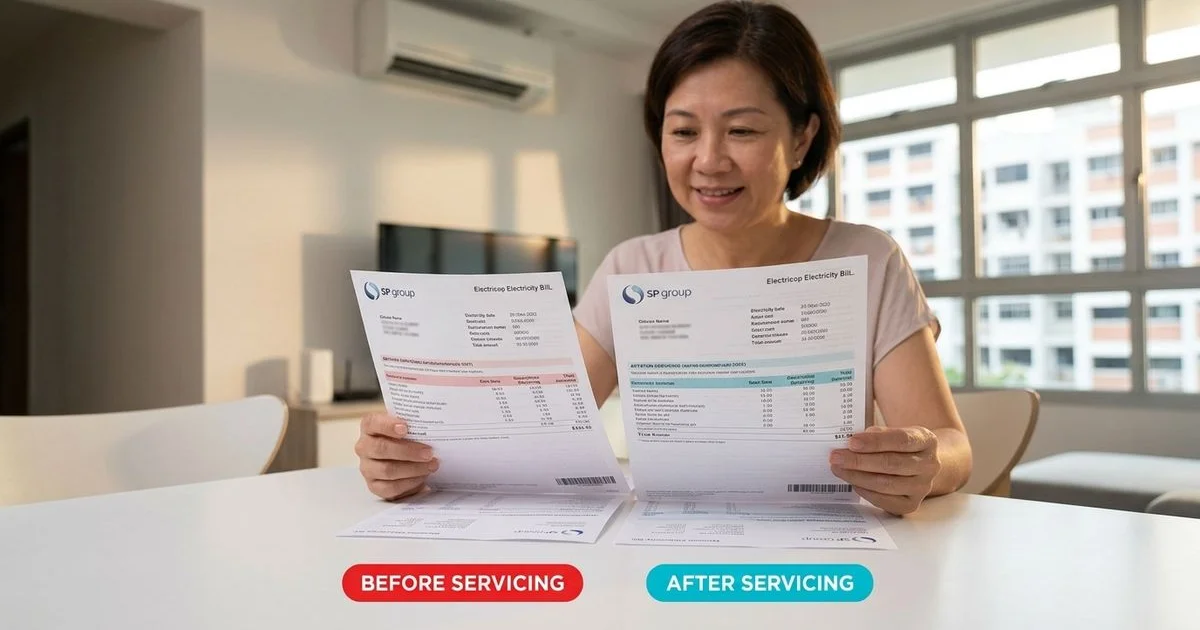
Your SP Group electricity bill has crept up, but nothing else in your household has changed. You have not added new appliances, your usage patterns are the same, and tariff rates have remained stable.
Why This Happens
A dirty system is highly inefficient. When the evaporator coil is coated in grime, the compressor has to run longer and harder to achieve the set temperature. Air conditioning units typically consume between 1,500 and 2,000 watts of power.
Industry estimates suggest that a poorly maintained system can use 15% to 25% more electricity than a clean, well-serviced unit. For a household facing current 2026 electricity tariffs, where cooling accounts for S$60 to S$80 of the monthly bill, that translates to S$9 to S$20 in unnecessary costs every month.
Read our detailed analysis of how servicing reduces your electricity bill for more specific numbers.
Why a Chemical Wash Helps
By restoring the coil and blower to a clean state, a chemical wash allows the unit to cool efficiently again. The compressor runs shorter cycles and consumes significantly less power.
Many homeowners see the cost of the service recovered within a few months through direct electricity savings.
Indicator 6: It Has Been 12 Months or More Since the Last Deep Clean
Even if your system seems to be working fine, proactive maintenance prevents problems from developing in the first place. If it has been a year or more since your last deep clean, scheduling one now is a smart preventive measure.
Why This Matters
Some grime buildup happens so gradually that you do not notice the slow decline in performance. You adjust to the slightly warmer room, the slightly musty smell, and the slightly higher bill without connecting them to your unit’s condition.
The average lifespan of an air conditioner in Singapore is 7 to 15 years. Leaving dirty coils uncleaned increases compressor wear by up to 35%, drastically shortening that lifespan. A wash after a year of operation often reveals how much performance had actually degraded, because the improvement afterward is immediate and obvious.
Recommended Schedule
For most Singapore households, we recommend following a clear maintenance routine.
Our suggested timeline includes:
- General servicing every 3 months
- Chemical wash every 12 to 18 months
- Chemical overhaul only when specific problems warrant it (typically every 3 to 5 years)
This schedule keeps your system clean, efficient, and healthy year-round. For more details on servicing frequency, see our guide on how often to service your aircon.
What to Expect During a Chemical Wash
If you have identified one or more of the indicators above, the service process is straightforward and efficient. Here is exactly what happens when you book this service:
| Step | Action Performed | Detail |
|---|---|---|
| 1 | Assessment | The technician checks the unit’s current condition and confirms the treatment is appropriate. |
| 2 | Preparation | Protective sheets are placed below the indoor unit to safeguard your walls and floors. |
| 3 | Disassembly | The front panel and filters are removed to gain clear access to the internal components. |
| 4 | Chemical Application | A specialised cleaning solution is applied directly to the coil, blower, and drainage tray. |
| 5 | Dwell Time | The solution is left to work for 10 to 15 minutes, breaking down stubborn biological growth. |
| 6 | Rinse | All internal components are thoroughly rinsed with clean water to flush out the dissolved grime. |
| 7 | Drainage Clearing | The condensate pipe is forcefully flushed to remove any remaining Zoogloea slime. |
| 8 | Testing | Everything is put back together, and the system is powered on to ensure proper airflow and cooling. |
The entire process takes 30 to 45 minutes per unit. This can easily be done during the same visit as general servicing for your other units.
Chemical Wash Cost in Singapore
Pricing in Singapore ranges from S$80 to S$120 per unit, with discounts typically available for multiple units. For a detailed cost breakdown across different service types, check our aircon servicing cost guide.
We offer transparent pricing with absolutely no hidden charges. Every completed wash comes with our 90-day service warranty. If any issue related to the wash reoccurs within that period, our technicians will address it at no additional cost.
Do Not Wait Until It Gets Worse
The longer you delay maintenance when your unit shows these signs, the harder the technician has to work to restore it. Delaying action also increases the likelihood that you will end up needing a more expensive overhaul instead.
Routine care protects your investment and keeps your daily energy costs manageable.
If you have noticed any of these six indicators, contact Coolbest Aircon at 9182 5233 to schedule your appointment today. We offer same-day service across Singapore and will have your system back to peak performance quickly and affordably.
Coolbest Team
Coolbest Aircon Editorial Team
The Coolbest Aircon team shares practical tips from our 18+ years of air conditioning service experience in Singapore.